1. Ohh, this looks interesting
Card #27: put a short answer under the heading of our Norwegian AI visibility page. Laup was named in 2 of 56 answers to “verktøy for AI-synlighet” and 6 of 56 to “software for synlighet i KI”. It was also small and specific, one page and two prompts, so if it went wrong there was not much it could break.
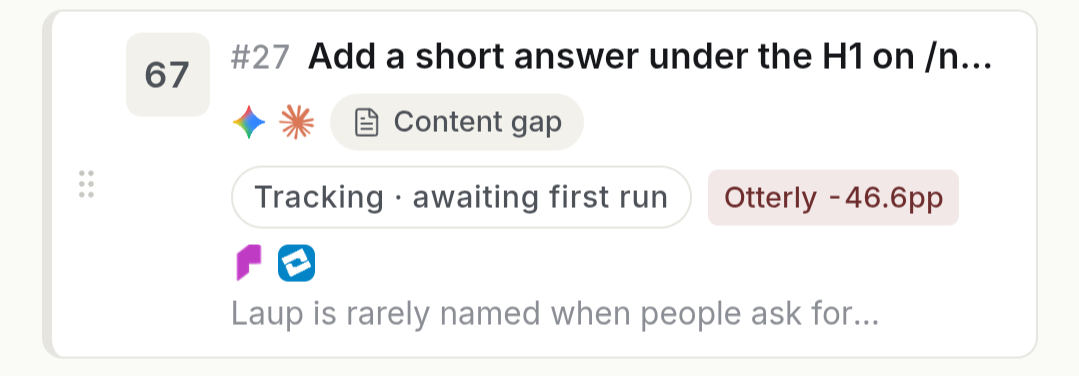
2. Chatting with Claude
The Laup MCP gives Claude our data: the cards, the answers, the searches the engines ran. So we just asked:
- “What is card #27 about?”
- “Can you check what the engines are searching when the prompts are asked”
- “Can you check if the relevant page contain KI and GEO?”
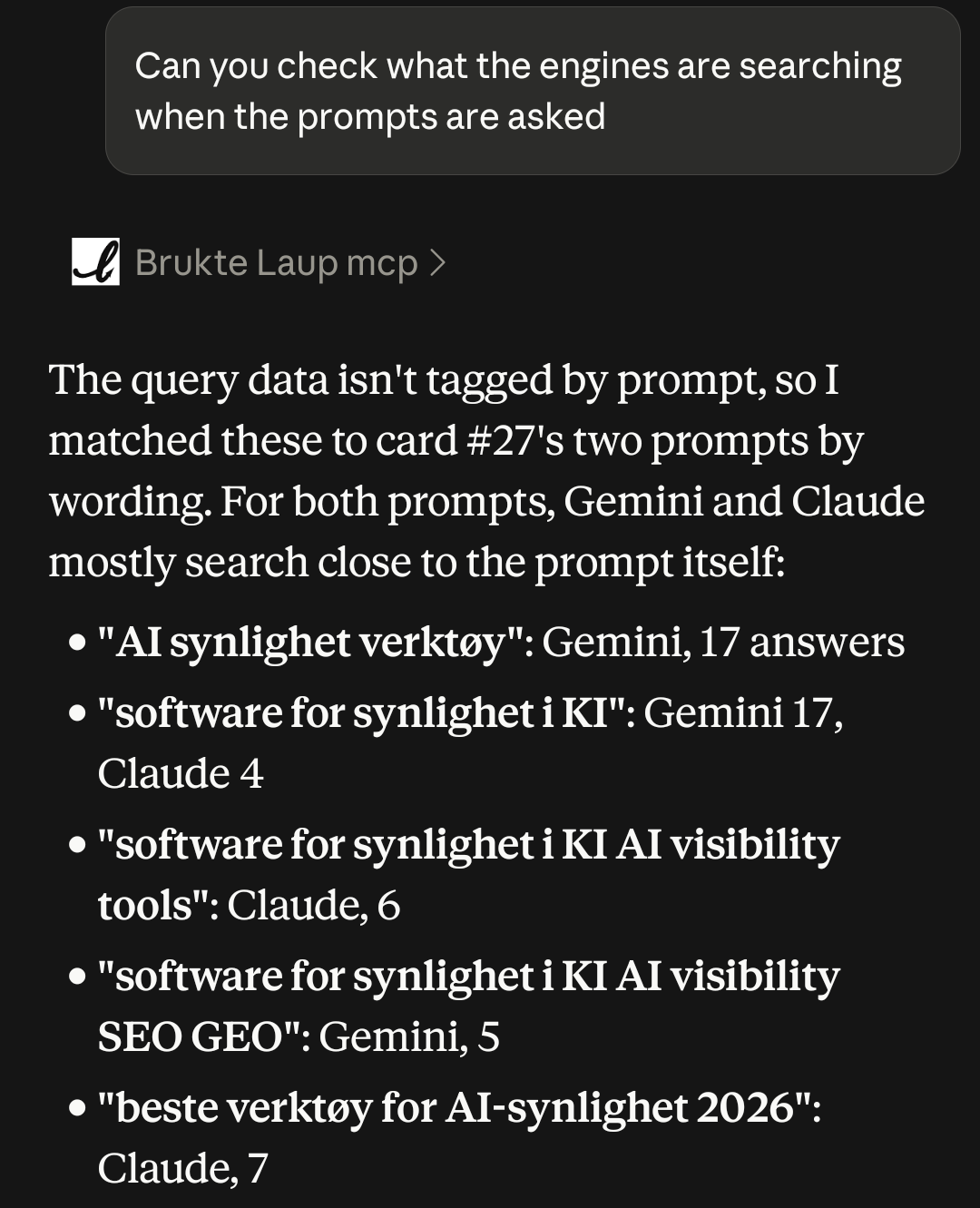
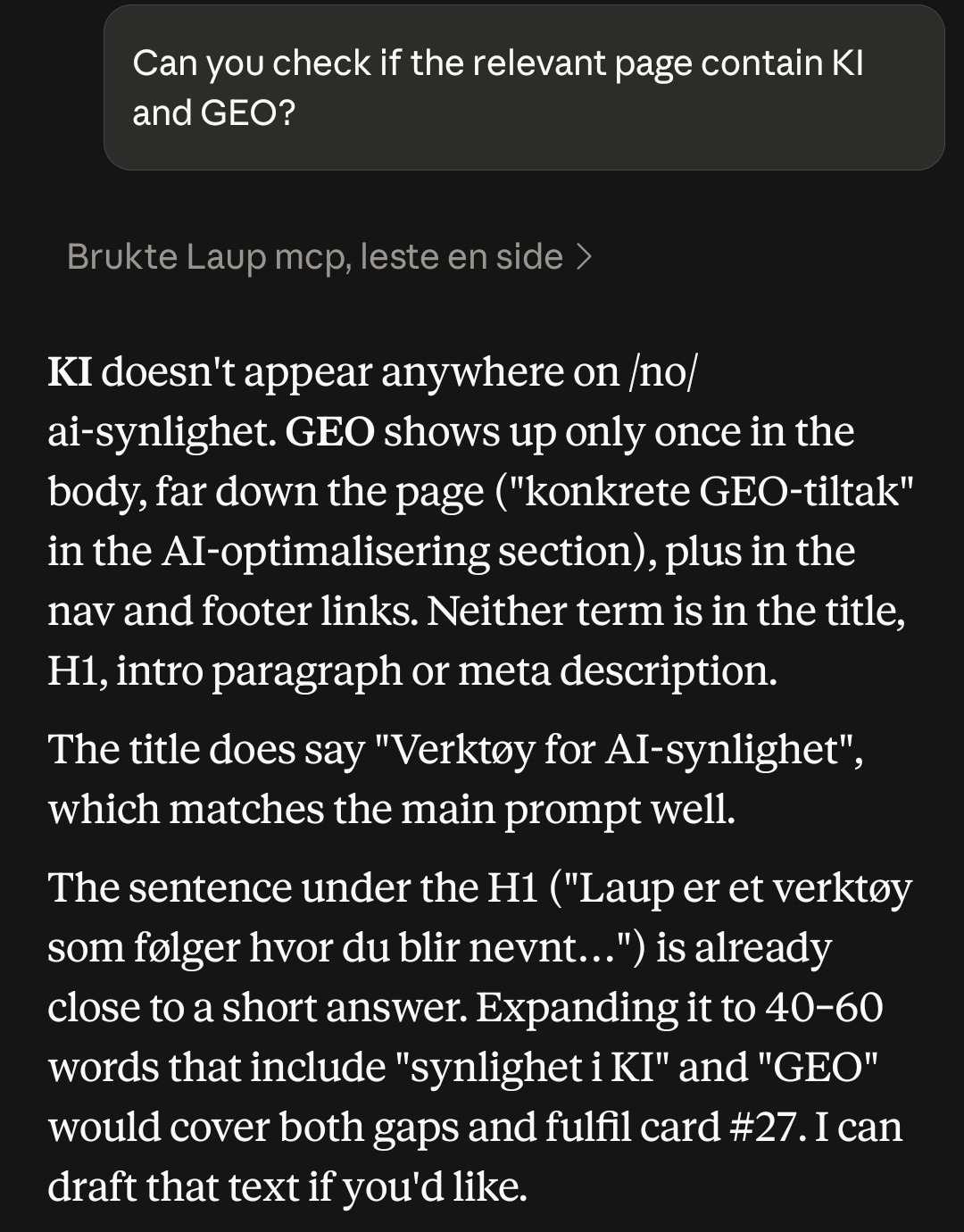
Seeing “KI” in the engines' searches, we asked whether our page used the word. It did not.
3. Plausible?
Then the question that matters: “Do you believe in this card? What would prove it wrong?”
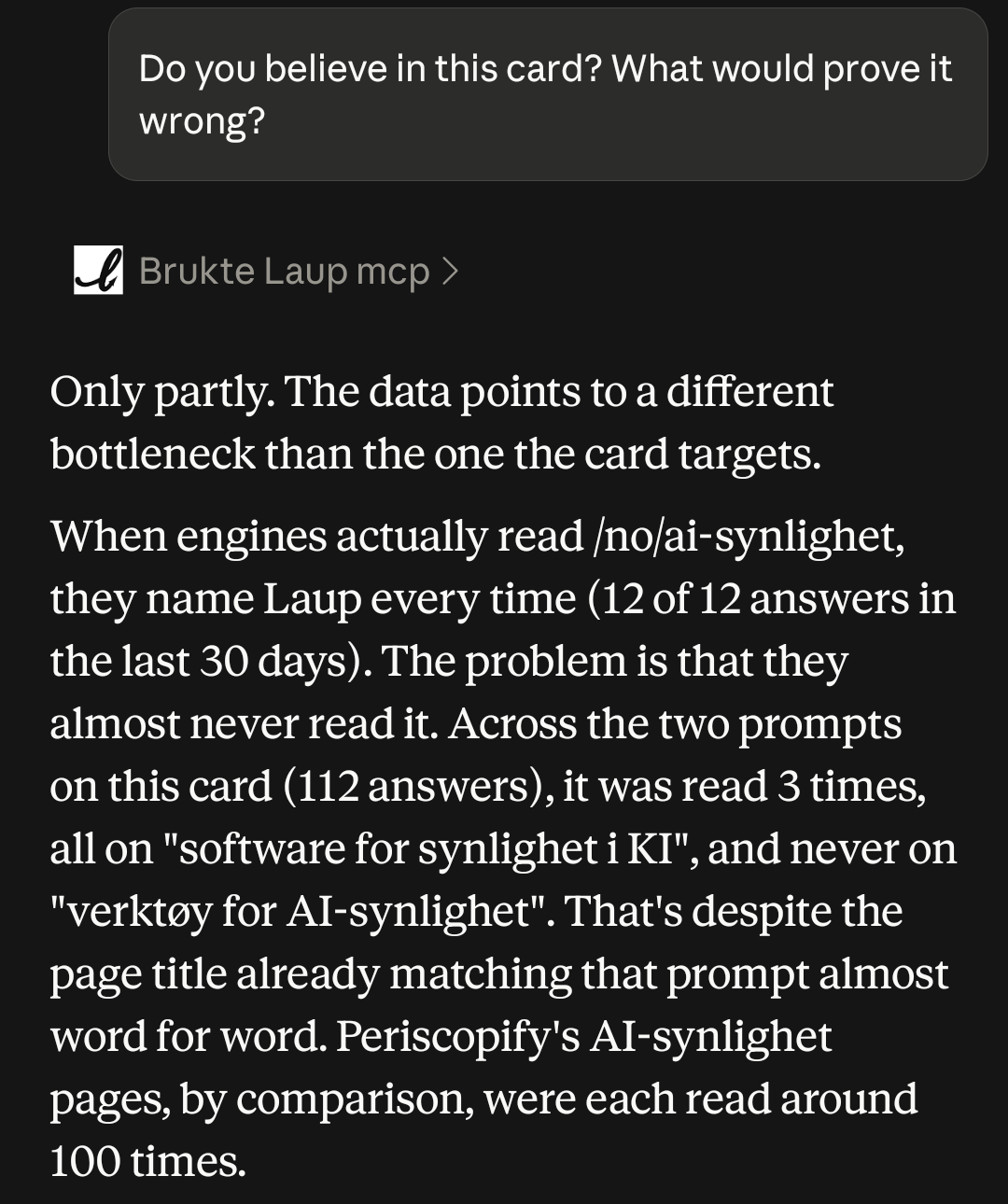
When an engine reads the page, it names us. It just almost never reads it, and a better paragraph does not get a page found. We did it anyway, because it is cheap and it tests the idea. And we added a link to the page from our Norwegian front page, which ChatGPT and Copilot do read for these questions.
4. Building it with Claude Code
Claude Code wrote the change, three review agents checked the code, the Norwegian and the markup, and it was live the same evening:
Et verktøy for AI-synlighet måler hvor ofte AI-assistenter nevner og anbefaler bedriften din. Laup er norsk programvare for synlighet i KI: hver dag stiller vi kjøpsspørsmålene dine til ChatGPT, Gemini og Copilot, og viser hvor du blir nevnt, hvem som dukker opp i stedet og hvilke kilder svarene bygger på. Målingene blir til konkrete GEO-tiltak.5. Submit to indexes
A change does nothing until the engines' search indexes have the new page: Google for Gemini, Bing for Copilot, Brave for Claude. So right after the deploy we submitted both changed pages to all three, and watched our request log for the crawlers:
| Index | /no/ai-synlighet | /no, the front page |
|---|---|---|
| Googlefor Gemini | 9 Oct 04:02 | 8 Oct 20:13 |
| Bingfor Copilot | 10 Oct 02:40 | not yet |
| Bravefor Claude | 10 Oct 06:26 | 10 Oct 06:26 |
Google came within hours, Brave and Bing within a day or two. Bing still has the old front page.
6. Measuring
From the moment it went live, the card measures itself:
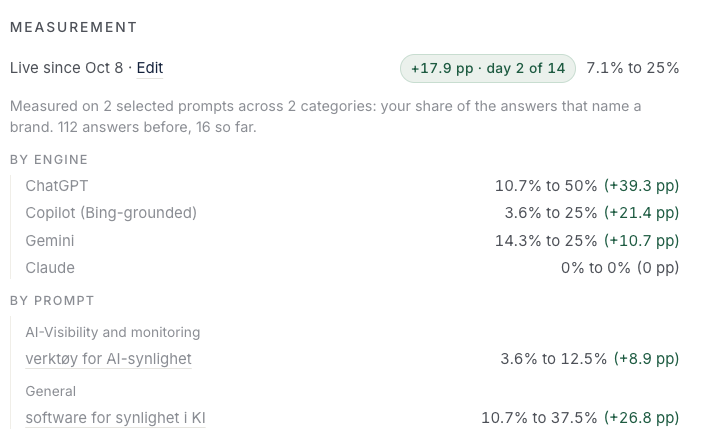
Looks great, but it is only 2 nights, which could easily be noise. We'll see after a few weeks.
7. Takeaway
A card is a starting point, not an order. Chat with the data before you build, ask what would prove the card wrong, and tell the search engines when you are done.
The previous experiment: Titles & AI Visibility: from 5.9% to 10%. More experiments on our own site are under How we work with our AI visibility.