I asked Claude on my phone: “Hvordan leverer jeg skattemeldingen 2026”.
We expected it to find Skatteetaten's own guide, Skattemeldingen: se, endre eller levere. It is the first result on Brave in Norway (picture 3), and it has an English twin.
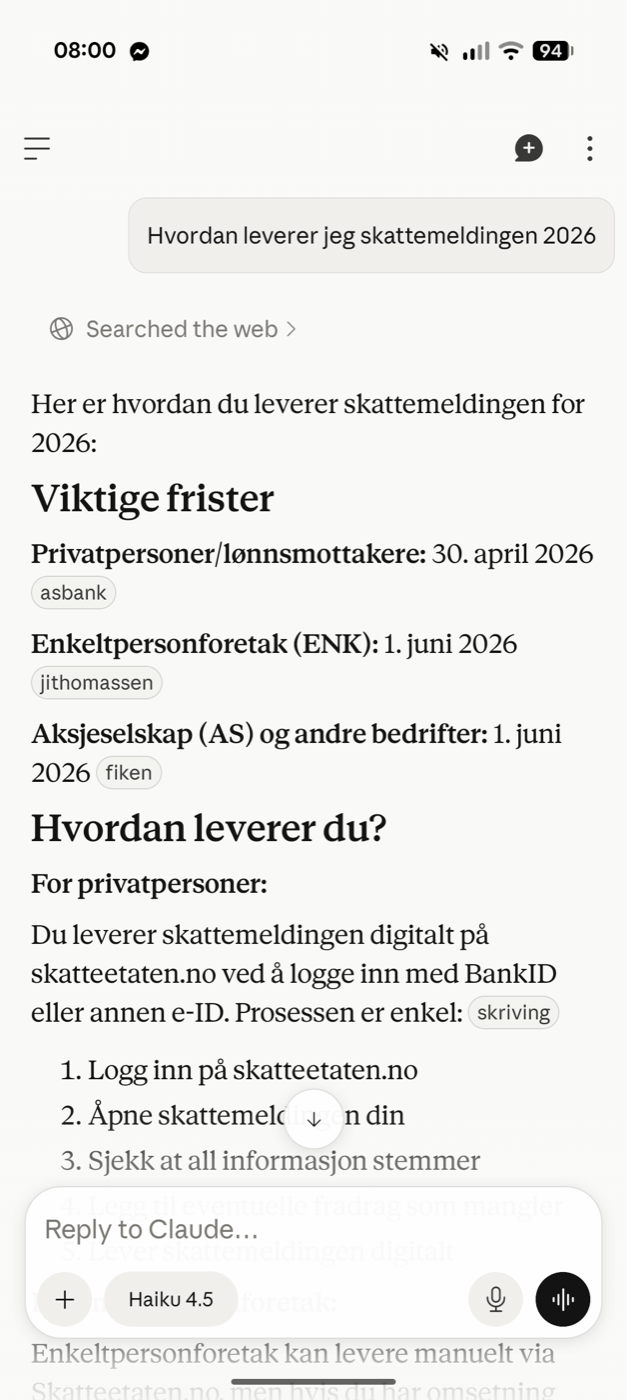
The answer looks fine. But the facts come from a bank and accounting blogs, not from Skatteetaten.
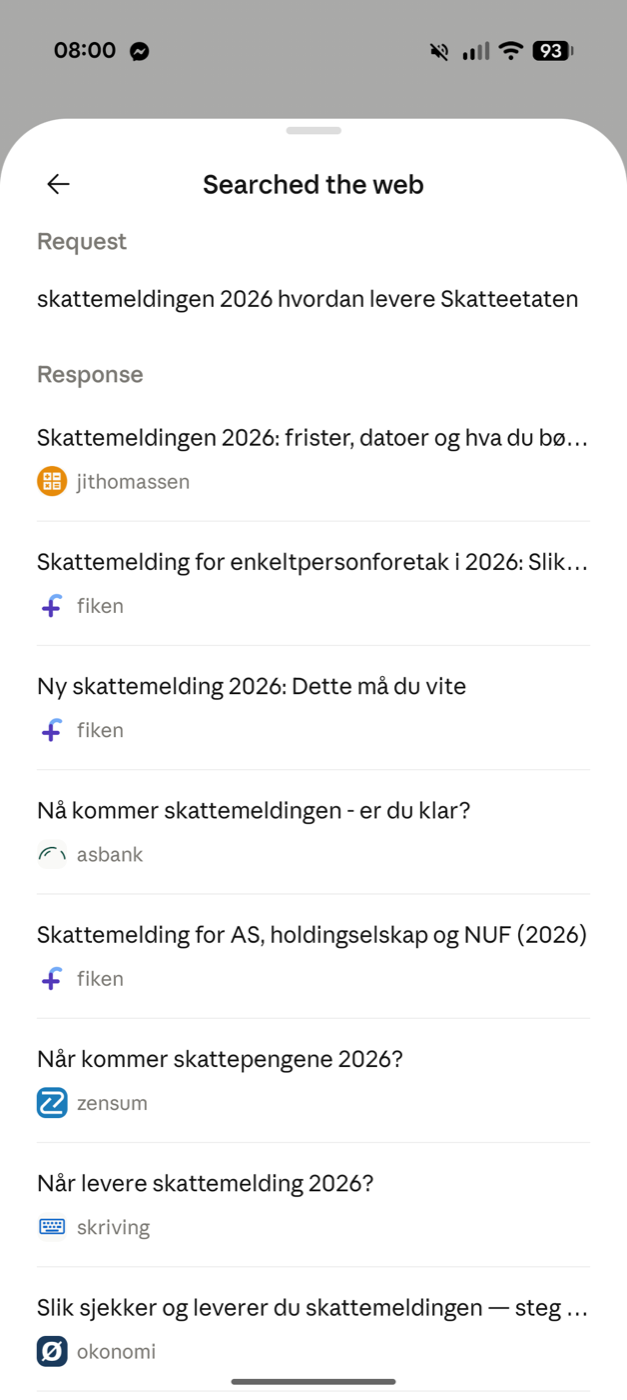
Claude even puts “Skatteetaten” in its own search. The guide is still not in the results.
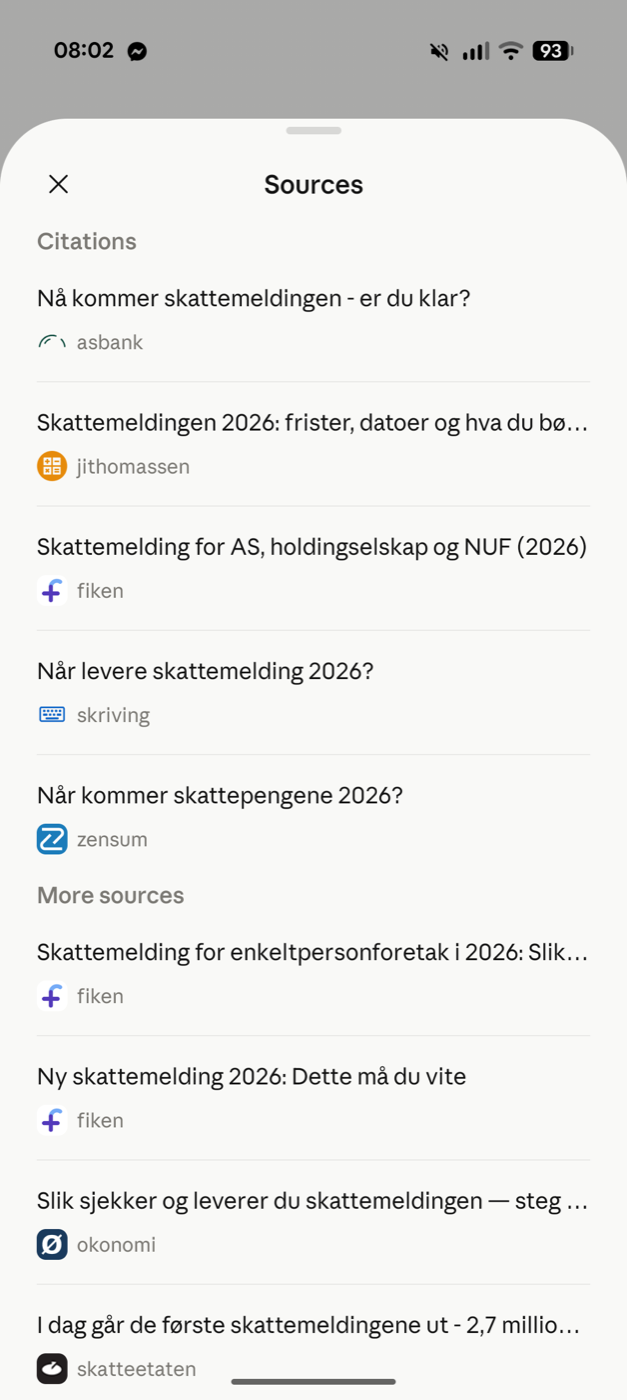
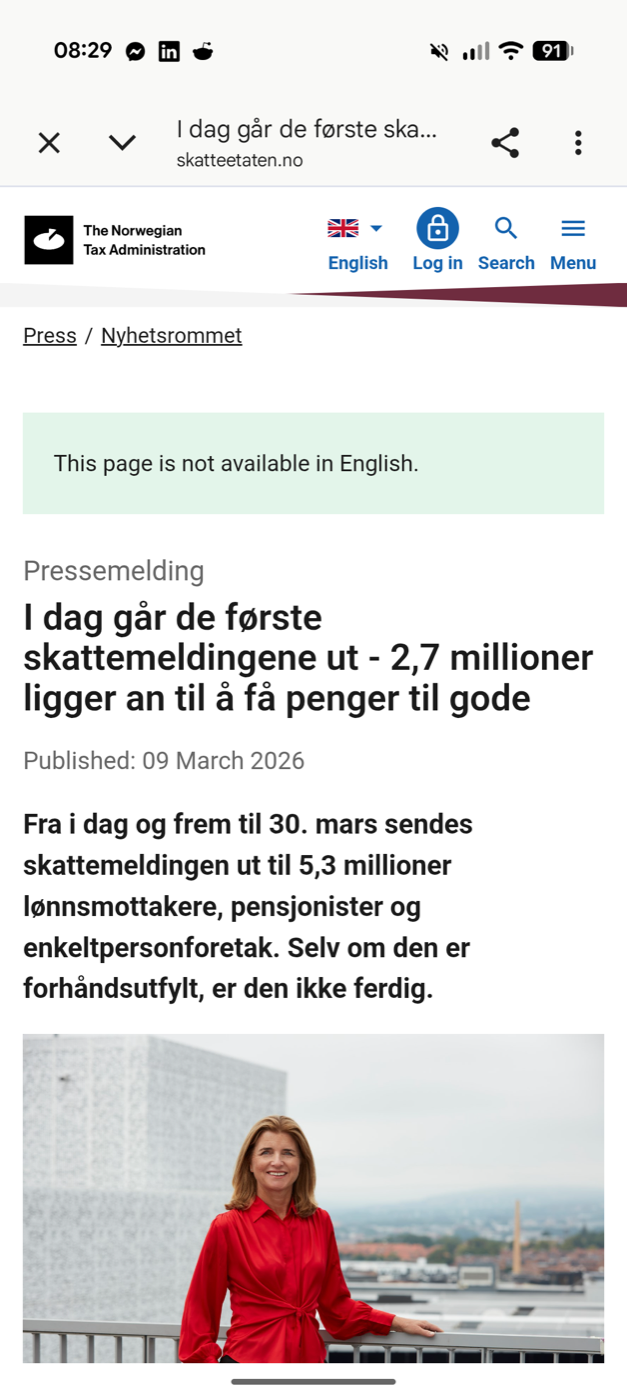
Skatteetaten shows up once, at the very bottom: a news article, not the guide, and not cited.
Then I ran Claude's exact search on Brave, the search engine Claude uses, with two different regions.
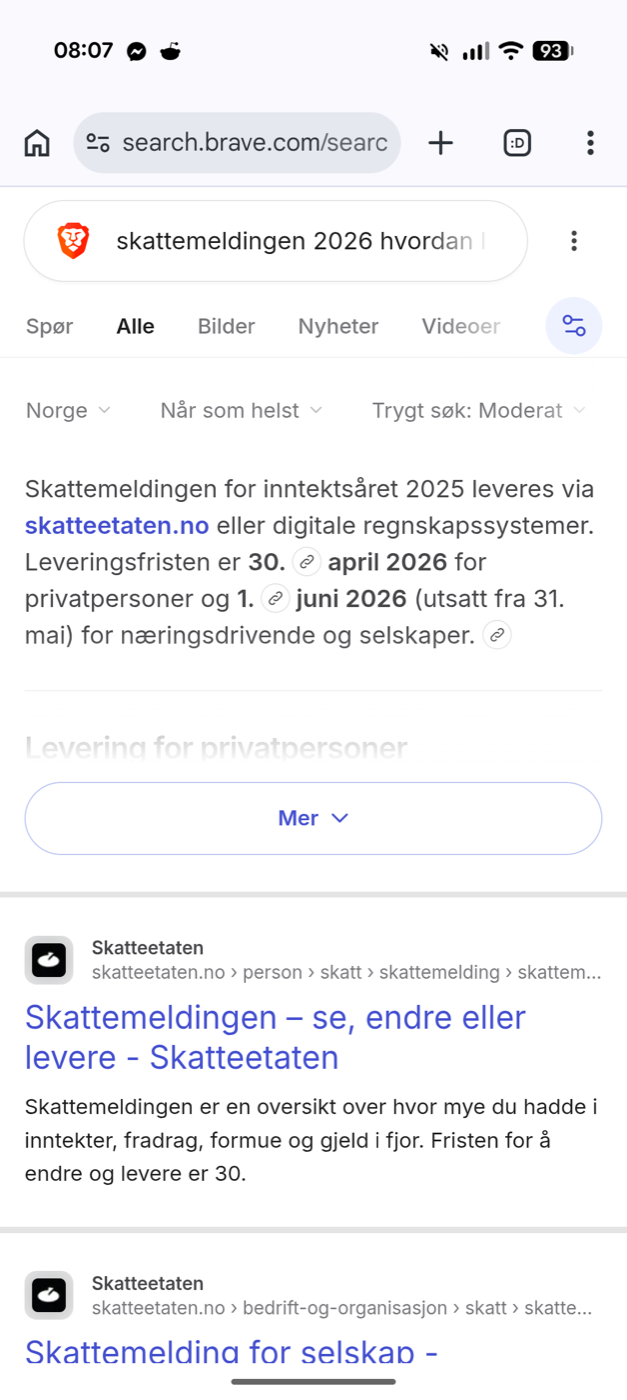
With the region set to Norway, Skatteetaten's guide is the first result.
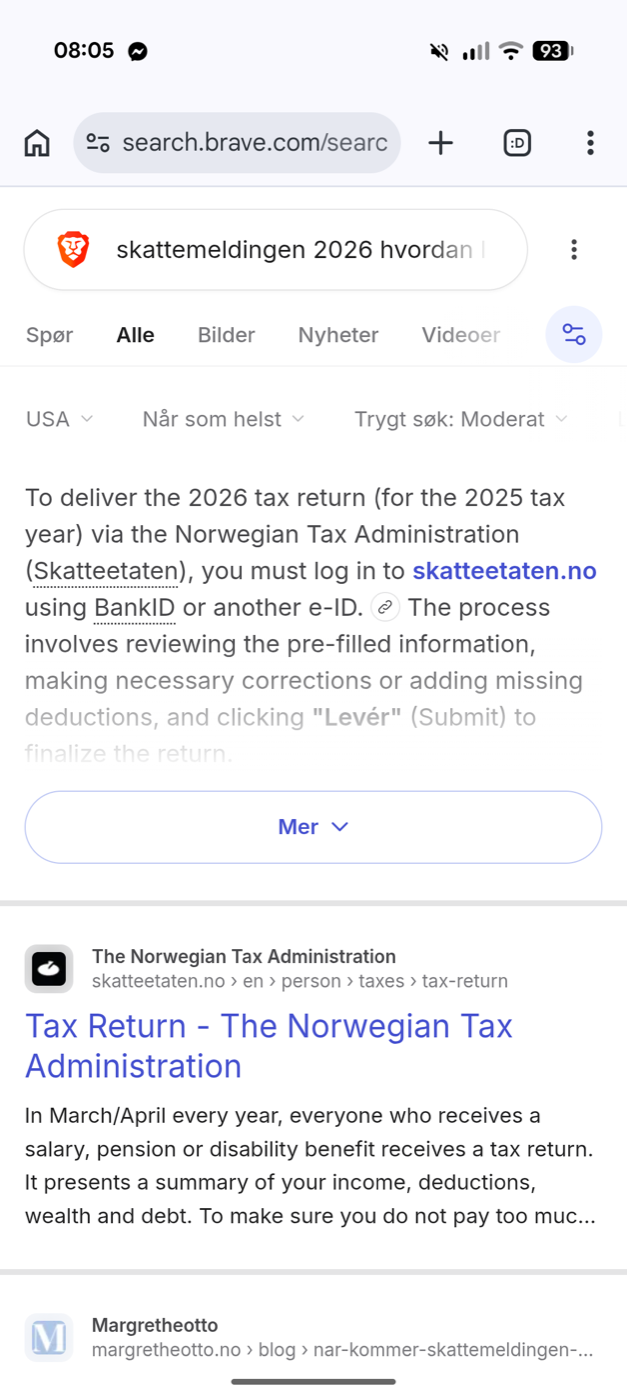
Set to USA, Skatteetaten only shows up in English.
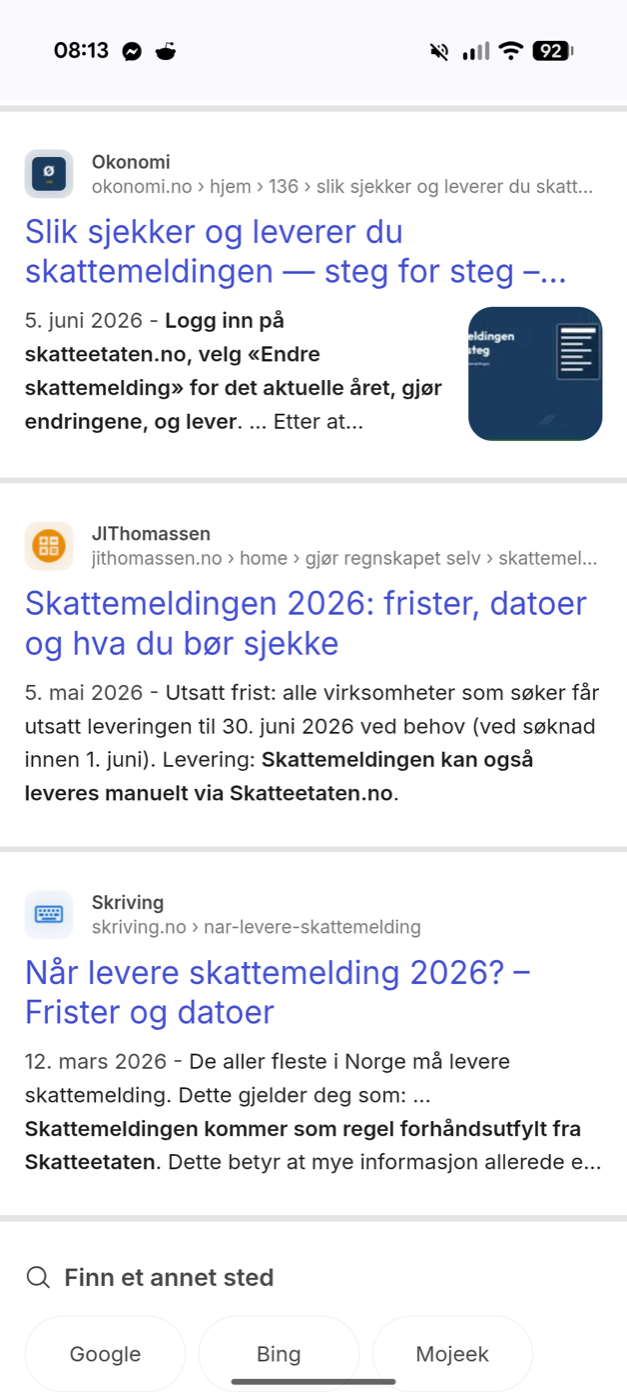
Further down are okonomi, jithomassen and skriving. The same blogs Claude used.
Why
The Skatteetaten page has an English twin. A language tag (hreflang) in the page tells search engines that the two are the same page in two languages:
hreflang="no" → /person/skatt/skattemelding/skattemelding-for-person/
hreflang="en" → /en/person/taxes/tax-return/tax-return-person/
So I think Claude searches Brave with an English locale. Then the Norwegian pages are filtered out and the English ones are shown instead. The English page is a poor match for a Norwegian question, so the blogs win.
We saw the same on our own site. When we removed the language tags between our Norwegian and English pages, 8 of 8 Norwegian pages came back in Claude's search the same day.
Notes
The one Skatteetaten page Claude did find, the news article, has no English version. The page says so itself: “This page is not available in English.”
Claude knows where I am. Same app, same incognito chat mode, same morning:
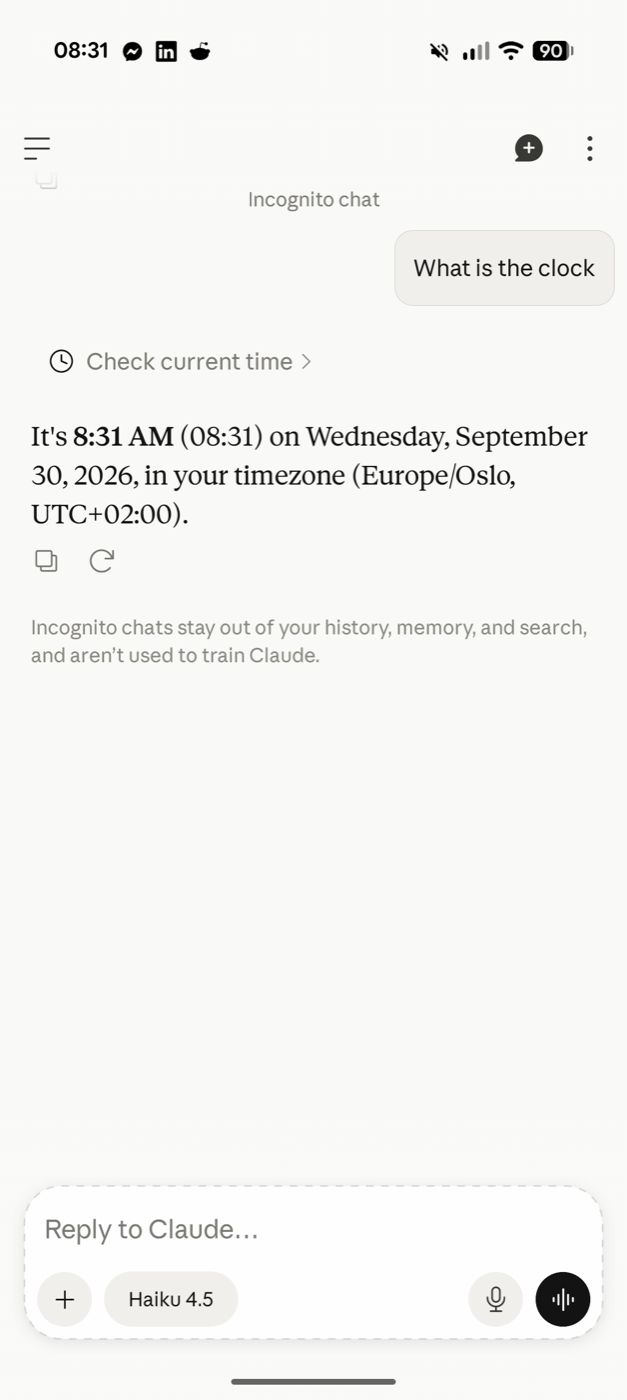
Claude app, Haiku 4.5, incognito chat, location on, no VPN, one try on 30 September 2026. Brave searched with Claude's own query, skattemeldingen 2026 hvordan levere Skatteetaten.
More experiments are under How we work with our AI visibility.